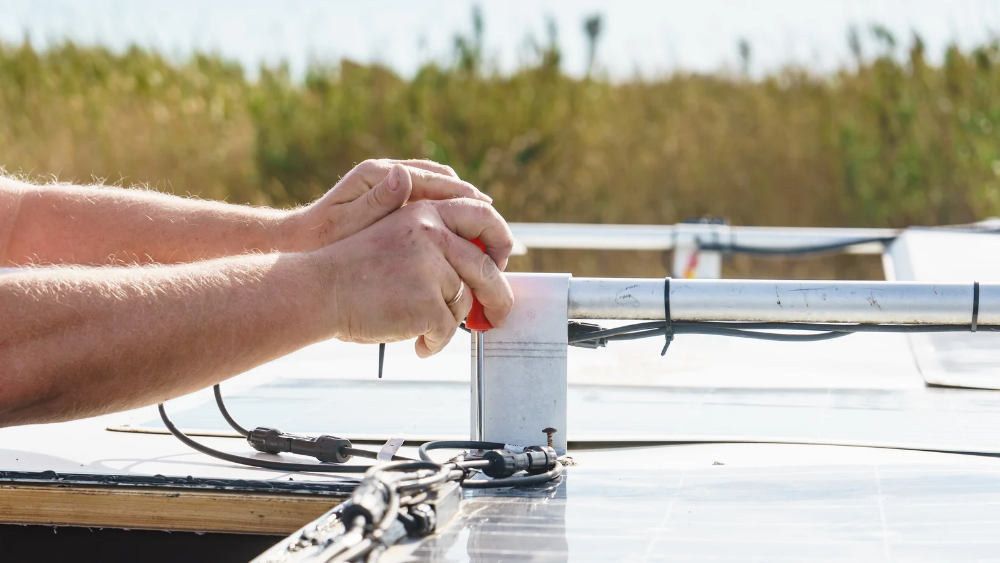
A cracked seal around an RV roof vent and a soft spot in the ceiling can both point to water getting in, but they call for different fixes. One might need a new bead of RV roof sealant. The other deserves a closer look before you spend money on a patch or coating.
If you’re getting your RV ready for the Central Coast rainy season, here’s how to spot common roof problems and decide whether you need routine seal maintenance, a repair, or a roof replacement evaluation.
How to Tell If Your RV Roof Needs Attention
Start with the places where the roof meets another surface: the front and rear seams, the edges of the roof, and the seals around vents, skylights, and antennas. Look for sealant that’s cracked, lifting, or pulling away. Check for torn roofing material, cracked vent covers, and gaps around fittings.
Inside, look for new ceiling stains, damp spots inside overhead cabinets, or soft paneling. Water can travel before it shows up, so a stain doesn’t necessarily tell you where the leak started.
Follow your RV manufacturer’s inspection schedule and roof access instructions. If you’re unsure whether the roof can support your weight, have it inspected from a safe setup by a technician.
RV Roof Sealant: When a Touch-Up Makes Sense
RV roof sealant is for seams, edges, and fittings. If the roof and surrounding material are sound and the problem is limited to a small area of worn sealant, a touch-up may be enough. If the old sealant is loose or failing across a wider area, it may need more prep before it can be resealed.
Before buying a sealant, identify your roof material. EPDM rubber, TPO, fiberglass, and aluminum can have different requirements. Check that the product is compatible with both the roof and the surface you’re sealing, such as a plastic vent flange. Self-leveling lap sealant is commonly used on flat roof surfaces, while a non-sag product is better suited to vertical areas when approved for that application. Some products also require a primer, so check the label before you start.
RV Roof Coating: Is It the Same as Sealant?
RV roof coating covers a broad area of the roof surface. It can help renew a weathered roof that’s still sound, provided the coating is compatible with the material and the surface is prepared as directed. Some coating systems call for a roof-specific primer.
If you have an active leak, find and address the source before coating the roof. A coating won’t fix a cracked vent, repair damaged decking, or tell you whether moisture is already trapped underneath. If the issue is limited to one seam, start there before buying a full-roof coating kit.
Is Your RV Roof Vent Leaking?
An RV roof vent can leak because the sealant around its base has pulled away, the cover has cracked, or the vent housing is damaged. Look at both the cover and the flange where the vent meets the roof.
If the cover is cracked but the housing and base are sound, you may only need a compatible replacement lid. If the base is damaged or loose, the vent may need to be resealed, repaired, or replaced. Bring the vent’s make and model or photos of the lid and hinge when shopping for a replacement. Similar-looking lids don’t always attach the same way.
RV Roof Repair vs. RV Roof Replacement
A localized RV roof repair may be enough for an isolated puncture, a failed seam, or a damaged vent when the surrounding roof and decking are sound. Finding the source first helps you avoid patching one spot while water continues to enter somewhere else.
An RV roof replacement evaluation makes sense when the roof has widespread deterioration, multiple soft spots, or signs of recurring water intrusion. A technician can assess whether the damage is limited to the roof covering or extends to the decking underneath. One leak doesn’t automatically mean you need a new roof, but soft areas or recurring stains are good reasons to get an inspection before applying more sealant.
Get Your RV Roof Checked in Paso Robles
Not sure whether you need sealant, a new vent lid, or a closer look at a leak? Delta RV offers RV roof inspections, seal maintenance, and roof vent repair and replacement in Paso Robles. Bring photos when you stop in for supplies, or call (805) 591-4463 to schedule an inspection.
Sources