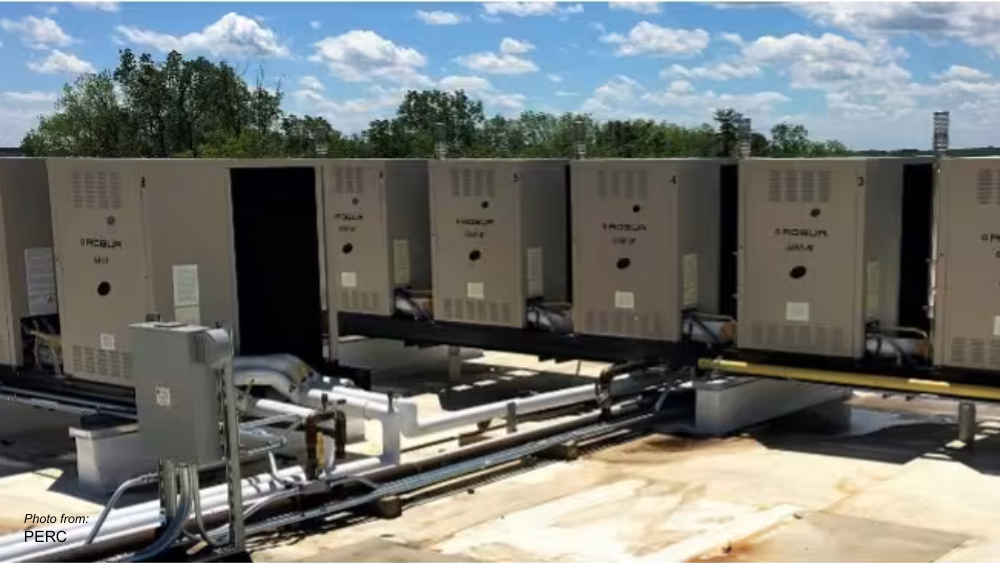
When most homeowners think of propane, they think of heating—keeping homes warm, powering water heaters, or fueling appliances like stoves. But propane is also being used in new and innovative ways, including cooling systems that are gaining traction in commercial and industrial settings.
As energy demand continues to rise and electric grids face increasing strain, propane is emerging as part of a broader, more resilient energy solution.
What Is Propane Cooling?
At first glance, propane cooling sounds a little counterintuitive. After all, propane is typically associated with heat. But in certain cooling systems, propane can be used to power the equipment that produces air conditioning and refrigeration.
One of the most common approaches uses a propane-powered engine to drive the compressor that circulates refrigerant through the system. While a traditional air conditioning unit uses an electric motor to power the compressor, a propane-powered cooling system uses propane as the primary energy source instead. The remainder of the cooling cycle works much like a conventional air conditioning system.
Another approach uses absorption cooling technology, which relies on heat generated from propane combustion rather than an electric motor to drive the cooling process.
Both technologies can help reduce reliance on the electrical grid, making them attractive options for facilities looking to improve energy resilience, manage peak electrical demand, or avoid costly electrical infrastructure upgrades.
Depending on the system design, propane cooling systems can use propane as the primary energy source to:
- Power the equipment that drives the cooling process
- Produce comfort cooling, refrigeration, or dehumidification
- Reduce dependence on electricity during peak demand periods
Where Is Propane Cooling Used Today?
At this time, propane-powered cooling systems are primarily used in larger commercial and industrial settings, where substantial cooling demand or limited electrical capacity can make conventional electric systems difficult or costly to expand.
Propane cooling can support comfort cooling in facilities such as:
- Schools, churches, and office buildings
- Assisted living communities and healthcare facilities
- Hotels, restaurants, and other hospitality businesses
- Multifamily residential buildings
- Commercial and industrial facilities
It is also used for process cooling, refrigeration, and dehumidification in operations such as:
- Greenhouses and indoor agriculture facilities
- Wineries, breweries, and distilleries
- Food processing and crop storage operations
- Server rooms and data centers
- Commercial printing and dry-cleaning facilities
- Hospitals and healthcare facilities, where dedicated cooling may be needed for equipment such as MRI machines, laboratory operations, patient comfort, and temperature-controlled storage areas for medications, vaccines, and other medical supplies
These facilities often require significant cooling capacity and may not have enough electrical infrastructure to support additional equipment without costly upgrades to panels, transformers, substations, or utility service connections. In those situations, adding propane storage and propane-powered cooling may be more economical than expanding the facility’s electrical infrastructure.
Propane cooling may also offer operational advantages for businesses that cannot afford prolonged interruptions. In larger installations, multiple cooling units can operate independently, providing redundancy if one unit requires service or goes offline. Some systems can also recover heat produced during the cooling process and reuse it for water heating or other facility needs, allowing one integrated system to support both cooling and heating applications.
Because the appropriate solution depends on the facility’s cooling load, existing infrastructure, energy costs, and operational needs, propane cooling is generally evaluated on a project-by-project basis.
Is Propane Cooling Used in Homes?
While propane cooling technology continues to advance, residential availability remains limited. Most homeowners today still rely on traditional electric air conditioning systems, while propane-powered cooling is more commonly used in commercial, industrial, agricultural, and large-scale refrigeration applications.
As the industry continues developing alternative cooling technologies, propane-powered systems could eventually become more accessible for residential applications. For now, however, they remain better suited to larger-scale cooling needs.
Benefits of Propane Cooling in Large-Scale Applications
In commercial and industrial environments, propane cooling systems can offer several advantages:
- Reduced Electrical Demand
By using propane as the primary energy source, these systems can reduce the amount of electricity a facility draws during peak summer periods. This may help businesses manage electrical demand and add cooling capacity without requiring costly upgrades to panels, transformers, or utility service connections.
- Reliable Performance
Propane cooling can provide an additional energy option for facilities where dependable cooling is essential. This can be especially important for hospitals and healthcare facilities, assisted living communities, emergency response facilities, food storage operations, data centers, and manufacturing environments that cannot afford extended cooling interruptions.
- Energy Efficiency
Absorption cooling systems can provide consistent performance with relatively low electrical input. Some systems can also recover heat produced during the cooling process and use it for water heating or other facility needs, helping businesses get more value from the energy they consume.
- Lower Emissions Profile
As businesses evaluate energy solutions, the conversation is no longer focused solely on cost and performance. Many organizations are also comparing carbon intensity, energy resilience, and long-term sustainability goals.
Carbon intensity measures the amount of greenhouse gas emissions produced for each unit of energy generated. According to the Propane Education & Research Council (PERC), conventional propane has a carbon intensity of approximately 79 gCO₂e/MJ compared to the national average electric grid at approximately 130 gCO₂e/MJ. However, the carbon intensity of electricity varies by state depending on how power is generated, making regional energy sources an important consideration when comparing options. As organizations look to balance operational reliability with environmental considerations, these comparisons are becoming an increasingly important part of long-term energy planning.
For businesses seeking to maintain dependable cooling while considering the environmental impact of their energy choices, propane-powered cooling may offer another option within a diversified energy strategy.
Why This Matters for the Future of Energy
Even if propane cooling is not yet a common residential solution, it highlights an important shift in how energy is being used.
As electricity demand increases due to population growth, extreme weather, and emerging technologies, businesses and facilities are looking for alternative and supplemental energy sources that can support reliability without placing every energy need on the electrical grid.
Propane cooling demonstrates that propane’s role extends beyond heating, water heating, and cooking. For commercial, industrial, and agricultural operations, it can be part of a broader energy strategy that helps manage electrical demand, avoid costly infrastructure upgrades, and maintain critical operations.
While most homeowners will continue relying on electric air conditioning for now, propane-powered cooling is already helping larger facilities stay productive, resilient, and efficient.
Checkout The Advantages of Propane Cooling brochure from Propane Education Resource Council for more info.
Sources:
- Propane Education & Research Council (PERC) – Propane Cooling Systems
- PERC – Propane Cooling Fact Sheet
- PERC – Propane Cooling 101: An Introduction to Process Cooling and Its Applications
- U.S. Department of Energy – Novel Solar Absorption Cooling System to Reduce Peak Loads
- U.S. Energy Information Administration (EIA) – Energy Consumption Trends